
5 Things to Do If You Have a Roof Leak in Cork
If water is coming through your ceiling right now, do these five things in order: catch the water, turn off the electrics in that part of the house, release a bulging ceiling into a bucket, photograph everything before you clean up, and ring a roofer. Stay off the roof yourself.
The quicker you act, the better off you will be. A leak that gets dealt with the same day is usually a slate and a bit of flashing. The same leak left for three weeks is joists, insulation, plasterboard and a repaint, and the damage is often worse than it looks because it can be internal as well as external. Water tracks along timbers and soaks insulation long before it shows up on your ceiling.
1. Catch the water and move your stuff
Get a bucket or a basin under the drip and put an old towel in the bottom of it so it does not splash everywhere. Move furniture, rugs and anything electrical out of the way, and lift carpet at the edge if you can. A bucket takes two minutes. A ruined sofa is a few hundred euro.
If the water is spreading across the ceiling rather than dripping in one spot, put down more than one container. Leaks rarely come through where they started.
Get a bucket or a basin under the drip and put an old towel in the bottom of it so it does not splash everywhere. Move furniture, rugs and anything electrical out of the way, and lift carpet at the edge if you can. A bucket takes two minutes. A ruined sofa is a few hundred euro.
If the water is spreading across the ceiling rather than dripping in one spot, put down more than one container. Leaks rarely come through where they started.
2. Turn off the electrics in that part of the house
If water is anywhere near a light fitting, a ceiling rose, a socket or a smoke alarm, switch off that circuit at the fuse board. Do not stand in water and do not test a fitting to see if it still works.
Attic light near the leak? Leave it off and use a torch. Once the leak is fixed and everything has dried out, get an electrician to check any fitting that got wet before you switch it back on.
If water is anywhere near a light fitting, a ceiling rose, a socket or a smoke alarm, switch off that circuit at the fuse board. Do not stand in water and do not test a fitting to see if it still works.
Attic light near the leak? Leave it off and use a torch. Once the leak is fixed and everything has dried out, get an electrician to check any fitting that got wet before you switch it back on.
3. Release a bulging ceiling on purpose
If part of your ceiling has gone brown and started to sag, there is a pocket of water sitting on top of the plasterboard. Left alone, that will eventually come down in one lump, usually at the worst possible moment.
Put a bucket underneath, stand to one side, and pierce the lowest point of the bulge with a screwdriver so the water drains in a controlled way. It looks like you are making it worse. You are not. A small hole you made is a much cheaper repair than a collapsed ceiling.
If part of your ceiling has gone brown and started to sag, there is a pocket of water sitting on top of the plasterboard. Left alone, that will eventually come down in one lump, usually at the worst possible moment.
Put a bucket underneath, stand to one side, and pierce the lowest point of the bulge with a screwdriver so the water drains in a controlled way. It looks like you are making it worse. You are not. A small hole you made is a much cheaper repair than a collapsed ceiling.
4. Photograph everything before you clean up
Before you mop, before you bin the ruined rug, take photos and a short video. Get the ceiling, the walls, the floor, the damaged contents and the buckets. Timestamps on your phone do that job for you.
Your home insurance will usually cover sudden water damage from a storm but will not cover damage from long-term wear that was never dealt with. Photos taken on the day are what settle that argument. Keep receipts for anything you buy, including the dehumidifier hire.
Before you mop, before you bin the ruined rug, take photos and a short video. Get the ceiling, the walls, the floor, the damaged contents and the buckets. Timestamps on your phone do that job for you.
Your home insurance will usually cover sudden water damage from a storm but will not cover damage from long-term wear that was never dealt with. Photos taken on the day are what settle that argument. Keep receipts for anything you buy, including the dehumidifier hire.
5. Ring a roofer and stay off the roof
Wet slates, wet felt and a ladder in Irish wind is how people end up in hospital. Every year in Ireland there are falls from roofs that did not need to happen. Leave it to someone who does it every day and is insured for it.
Wet slates, wet felt and a ladder in Irish wind is how people end up in hospital. Every year in Ireland there are falls from roofs that did not need to happen. Leave it to someone who does it every day and is insured for it.
When you ring, have ready:
Roughly where in the house the water is coming in
What the roof is (slate, concrete tile, flat felt, a flat extension)
How old the house is if you know it
Whether it leaks only in heavy rain or all the time
Your photos
Most roofers will happily take pictures on WhatsApp. Send the ceiling, the stain, and if you can see it safely from the ground or an upstairs window, the outside of the roof too. It means whoever is coming out knows what happened before they arrive, can bring the right materials, and can often tell you over the phone whether it is urgent or can wait until the rain stops.
What not to do
Do not go up on the roof in the rain
Do not climb into the attic in the dark without a torch and something solid to stand on
Do not paint over a water stain and hope. It will come back and it will be bigger
Do not accept a cash-only quote from someone who knocked on the door after a storm
Do not leave it until the spring. Winter is the worst possible time to be putting it off
Get it looked at quickly
A leak that is fixed the week it appears is normally a small job. Left through a Cork winter, that same slip turns into rotten joists, mould behind the plasterboard and a much bigger bill. Remember the damage is not just the stain you can see on the ceiling; the water above it has already been in the insulation and along the timbers.
Winter conditions in Ireland are hard on a roof. It is not one dramatic storm, it is weeks of driving rain off the Atlantic hitting the same weak spot from the same direction, with wind getting under anything that has lifted, and no dry spell long enough for the roof timbers to dry out in between. A defect that was harmless in July becomes a leak in November and a serious repair by February. That is also why it is worth getting on the phone early in the season rather than waiting for the first bad night, when every roofer in the county is booked out.
What usually causes roof leaks in Cork
Slipped or cracked tiles. The concrete-tiled estates around Douglas, Togher, Ballyphehane and Ballincollig are at the age where nail fatigue starts letting tiles slip. One missing tile is enough.
Failed flashing and valleys. Where the roof meets a chimney, a wall or another roof slope. Chimney flashing on older houses is the single most common cause we find.
Old slate on period houses. The Victorian and Edwardian stock in Montenotte, Blackrock, Sunday’s Well and the terraces near the city centre. Natural slate lasts a century but the nails and the laths do not.
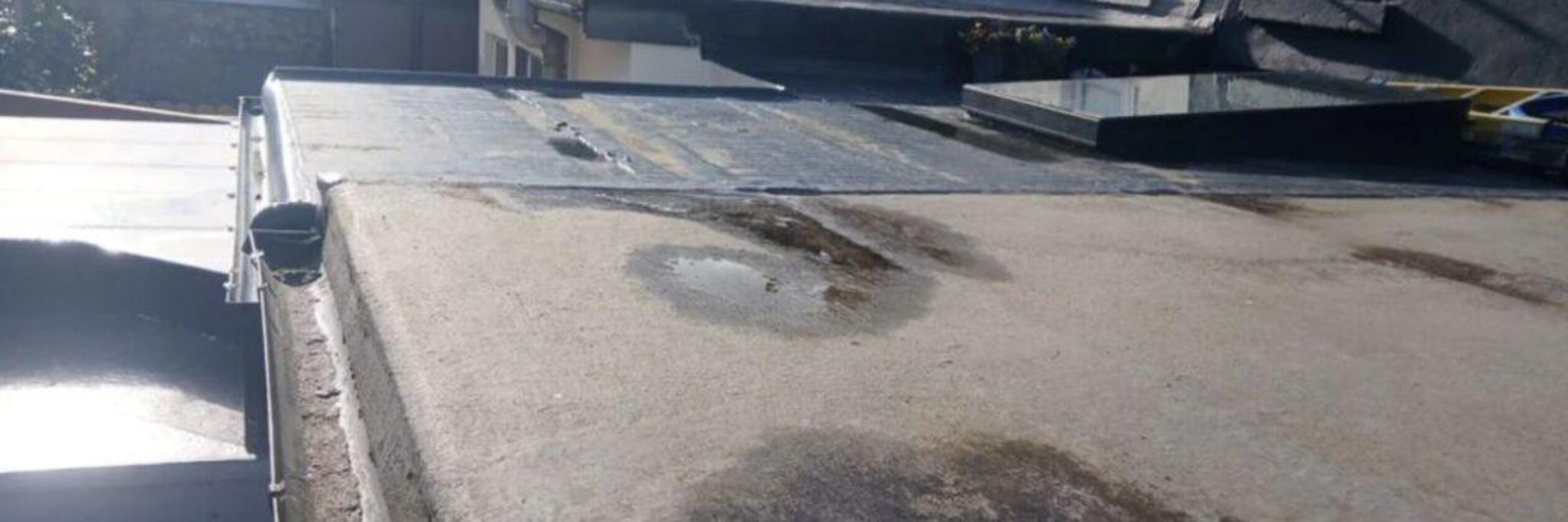
Flat roof extensions. Very common on south-side extensions and dormers. Old felt gets brittle, splits along a seam or at the upstand, and then holds water instead of shedding it.
Blocked gutters and valleys. Not strictly a roof leak, but it produces the same wet patch. Leaves and moss back the water up until it comes in over the fascia.
Leaking roof in Cork? Call us
We repair roofs across Cork city and county, and we can usually get to an active leak the same day or the next morning. Send us photos on WhatsApp and we will tell you straight away whether it is urgent.
[PHONE NUMBER] — or fill in the form and we will ring you back.